
Enter a keyword
Language
English
Accesibility
Slab fabrication is at the heart of every successful countertop project. A craft perfected over many decades, slab fabrication is a precise, methodical process that ensures accuracy, durability, and a clean final installation.
For fabricators and installers, mastering the slab fabrication process helps improve accuracy and consistency, reduce material waste, increase production efficiency and meet client expectations. For architects and designers, understanding countertop fabrication enables better collaboration with fabrication teams and more realistic design planning.
Whether you’re new to slab fabrication or looking to refine your countertop fabrication workflow, understanding the fundamentals helps deliver consistently high-quality results across residential and commercial projects.
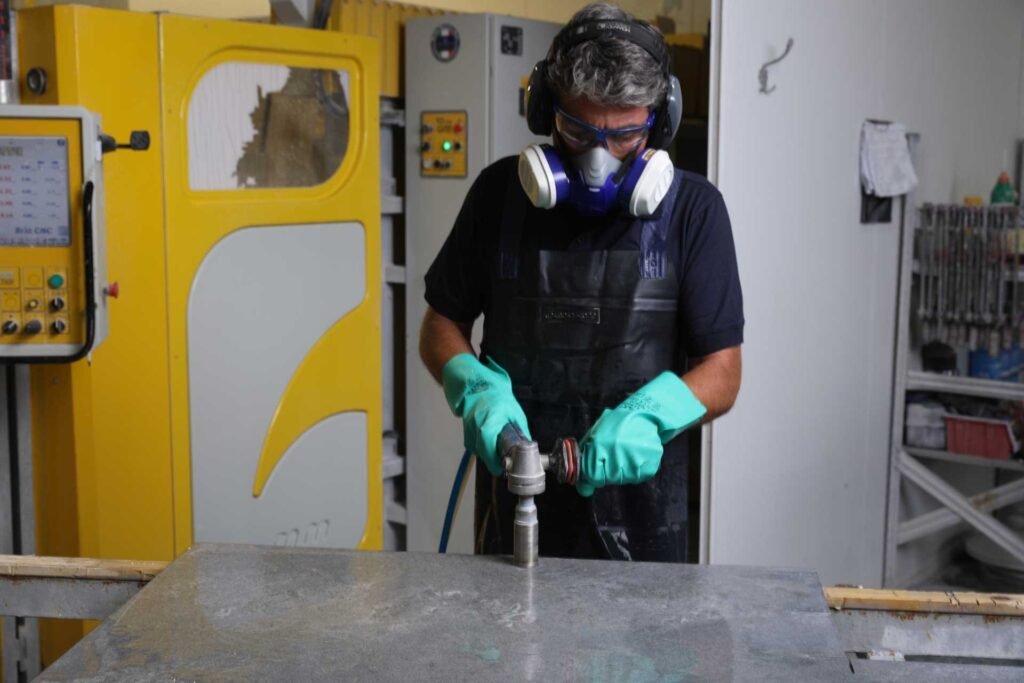
Slab fabrication refers to the process of transforming large stone slabs into finished countertop components ready for installation. This includes measuring, cutting, shaping, edge profiling, polishing, and preparing cutouts for sinks, cooktops, and other fixtures.
In countertop fabrication, precision at every stage is essential. Errors made early in the process, such as inaccurate measurements or improper cutting, can impact fit, performance, and overall project timelines.
In slab fabrication, planning means everything. Once tasked with a specific slab fabrication assignment, make sure you have the following planning essentials covered:
Caesarstone slabs are produced under strict quality and consistency standards, following clearly defined quality assurance procedures. This gives fabricators a reliable material and a strong sense of confidence as they begin each project.
At the same time, experienced fabricators know that taking a brief moment to visually review the slab before fabrication is simply part of good professional practice. Looking at the slab under proper lighting and from different angles helps confirm that it is well suited to the specific project—both visually and technically.
This step is not about questioning quality, but about working thoughtfully with the material: planning clean seams, optimizing layout, and aligning the slab’s appearance with the client’s design expectations. When more than one slab is involved, a quick visual check for color and pattern consistency helps support a balanced, cohesive final result.
Approaching slab selection with care at this stage supports smoother fabrication, better yield, and fewer surprises during installation—allowing Caesarstone’s material quality and the fabricator’s expertise to come together naturally.
Accurate measurements are critical in countertop fabrication. They also help capture any discrepancies between the original blueprints and plans, and conditions on-site. Most fabrication shops rely on digital templating systems to capture precise dimensions of the installation space. This step helps ensure:
Templating creates a reliable blueprint for the entire slab fabrication process, reducing installation challenges and minimizing on-site adjustments.
Once templates are approved, fabrication moves to cutting and shaping. Precision cutting plays a major role in reducing waste and preserving the structural integrity of the slab. This is the stage where good planning starts to show itself in the material. Clean cuts also help streamline later stages of countertop fabrication. Using CNC machines waterjet or precision saws, fabricators:
Choosing the right tools and setup for the specific slab material plays an important role here, as each material responds differently to cutting.
Small adjustments—such as blade selection and cutting speed—can make a noticeable difference. Working within the right range for the material helps reduce stress on the slab and supports a more controlled, predictable fabrication process.
Edge profiling adds both function and visual detail to countertops. Depending on project requirements, fabricators create edge styles ranging from simple eased edges to more decorative profiles. During this stage, cutouts are created for sinks, cooktops and faucets and accessories. Accuracy is essential, as poorly executed cutouts or uneven edges can weaken the slab and impact long-term performance.
Cooktops: Cooktop cutouts are usually carried out for overmount installations, regardless of slab material. Porcelain slabs, however, can accommodate undermount cutouts for Invisacook cooktops. Flat installation is currently not supported by Caesarstone.
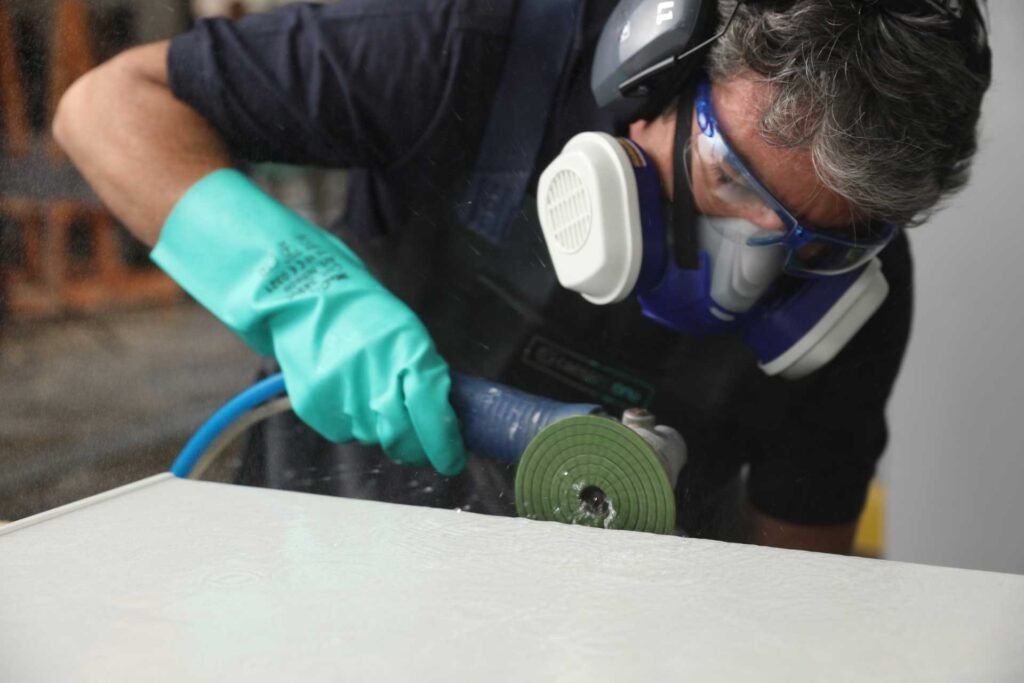
Polishing and finishing give the slab its final appearance and prepare it for installation. Depending on the desired look, finishes may include:
The success of any fabrication project also depends on the quality of materials used. Premium surfaces from brands like Caesarstone are engineered for consistency, making them easier to fabricate with precision and confidence.
Reliable materials support cleaner cuts, smoother finishes, and predictable results key factors for fabricators focused on efficiency and repeatable quality.
Slab fabrication is a detailed, multi-step process that combines craftsmanship, technology, and careful planning. From slab selection and templating to cutting, finishing, and final preparation, each stage plays a critical role in delivering countertops that perform well and look exceptional.
By understanding the basics of slab fabrication, fabricators and installers can optimize their workflows, reduce errors, and consistently meet the expectations of today’s design and construction professionals.
Looking to enhance your slab fabrication process knowledge? Start by downloading our fabrication guides for quartz and porcelain.
Have specific questions on slab fabrication? Feel free to connect with our team. We’ll be glad to provide additional information that support you during every stage of countertop fabrication.